
Introduction
Grok AI is becoming an important part of the growing artificial intelligence industry. Developed by xAI, Grok offers AI-powered conversations, voice technology, coding assistance, and tools designed to automate business tasks. Its integration with X and other products also makes it relevant to users, developers, and businesses.
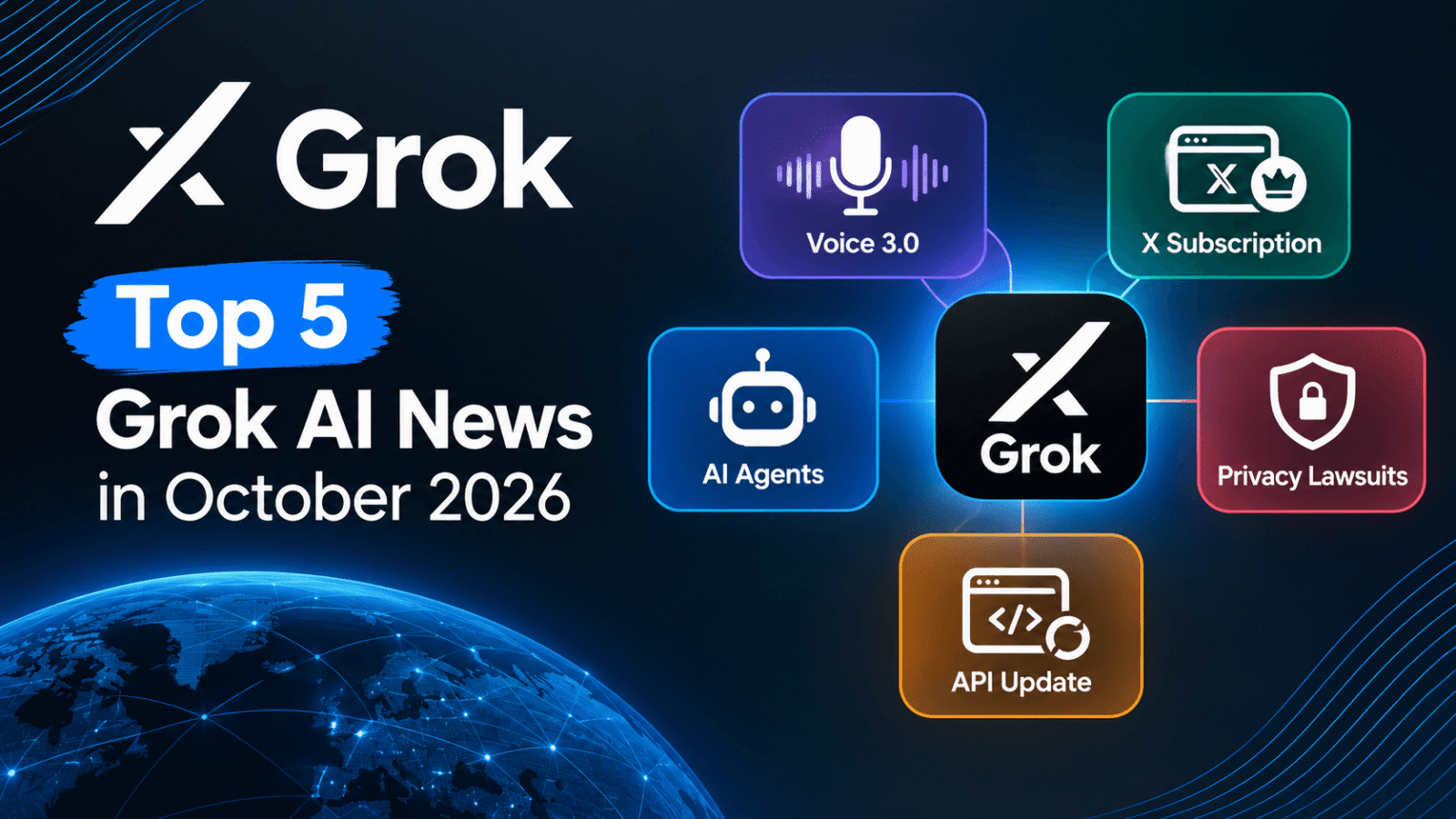
October 2026 has brought several important developments for Grok AI. These include the launch of Grok Voice 3.0, a new subscription combining multiple products, improvements to AI-powered customer support, and legal questions about facial privacy.
The latest Grok AI news also shows how the company is moving beyond traditional chatbots toward AI agents that can perform complete workflows.
In this article, we explore five major Grok AI updates in October 2026, explain why they matter, and look at what users and businesses should know.

1. Grok Voice 3.0 Introduces More Advanced AI Conversations
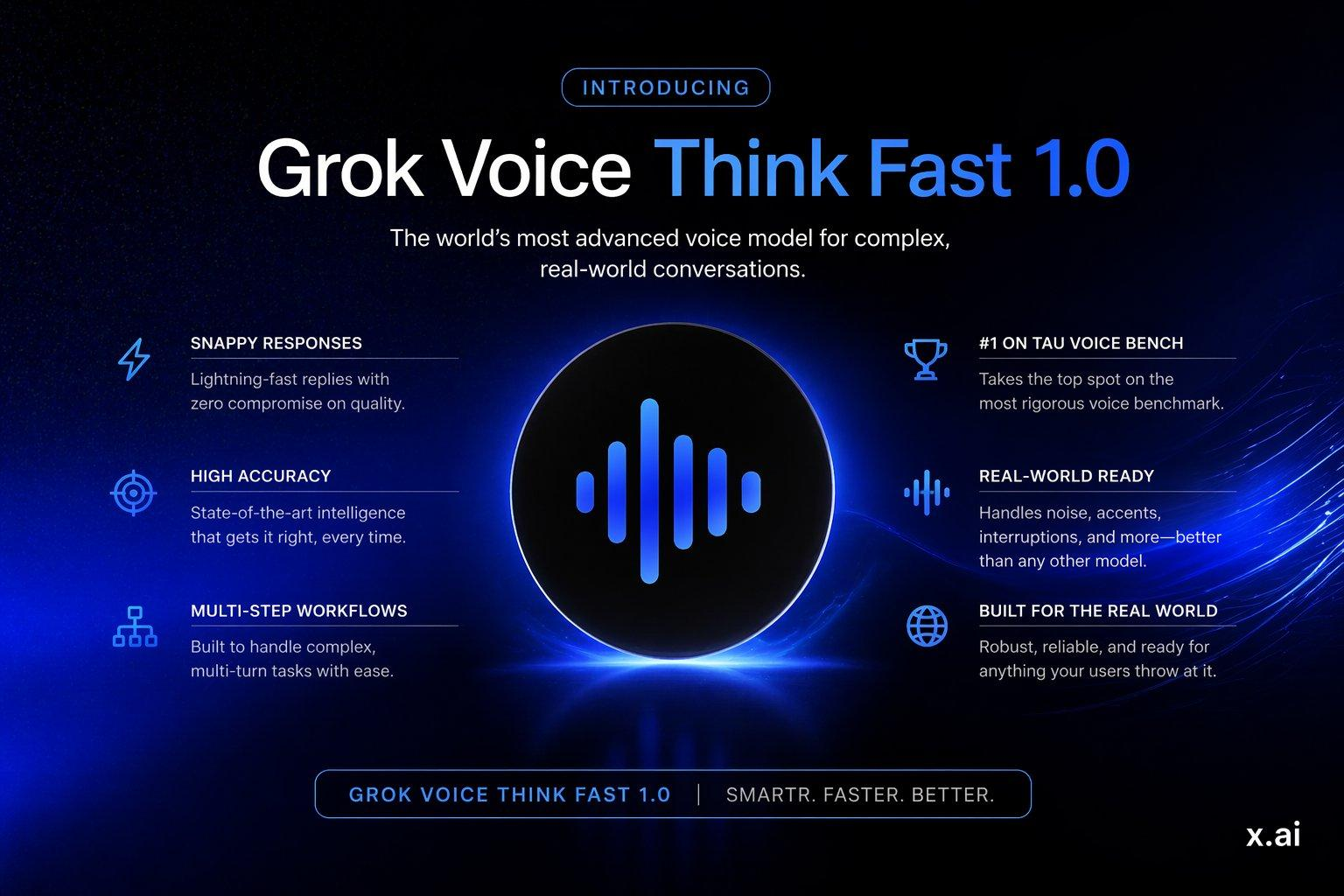
One of the biggest Grok AI updates in October 2026 was the introduction of Grok Voice 3.0 on October 14. The new model is designed to improve spoken conversations between people and AI systems.
Unlike a traditional chatbot that mainly responds through text, a speech-to-speech model can process spoken input and generate spoken responses. This approach can make conversations feel more natural and reduce the delays that interrupt communication.
According to xAI’s official announcement, Grok Voice 3.0 achieved a score of 86.9 on Artificial Analysis’s Speech-to-Speech Index. xAI also reported a 97% score on Full Duplex Bench, which evaluates how a model handles conversational timing, pauses, and interruptions.
These figures are company-reported results from named evaluations. They should not be treated as proof that the model performs best in every real-world situation.
What can Grok Voice 3.0 do?
The technology is designed for applications such as:
- Customer support: Answering spoken questions and helping customers resolve common issues.
- Voice assistants: Supporting more natural conversations with digital assistants.
- Business communication: Helping companies manage routine calls and customer enquiries.
- AI applications: Giving developers a voice model they can integrate into their own products.
xAI stated that Grok Voice 3.0 was available through its Voice Agent API at the same price as its predecessor.
For developers, the release provides another option for building voice-based applications. Businesses considering this technology should still evaluate response accuracy, language support, privacy, operating costs, and the need for human assistance.
Why this news matters: Voice AI is becoming more useful for customer-facing applications. Better conversational timing can improve the experience, although reliability and the quality of answers remain essential.
2. The X Subscription Combines Grok, Cursor, and X Benefits

On October 12, xAI announced The X Subscription, a subscription offering that brings Grok, Cursor, and X benefits together.
Grok provides AI assistance, while Cursor is an AI-powered coding environment designed to help developers write and work with software. Combining these products creates a more connected offering for people who use AI for both everyday questions and technical work.
According to the official X Subscription announcement, the service brings these products under one subscription structure.
The X Help Center explains that Grok and Cursor share an included weekly usage pool. Benefits on X depend on the selected plan and the connected account.
This means users should review the details before subscribing. Access to a subscription does not necessarily mean unlimited AI usage, and third-party models available through Cursor may incur additional charges.
What does this mean for users?
The combined offering may be useful for several groups:
- Content creators: Use Grok for research and writing assistance while keeping their social platform benefits in one subscription.
- Developers: Work with AI coding tools alongside Grok.
- Small businesses: Explore AI-assisted workflows without managing every product separately.
- Frequent X users: Combine eligible platform benefits with AI tools.
However, the best option depends on individual needs. Someone who only wants an AI chatbot may not need a subscription that includes coding features. Similarly, developers who depend on other AI models should check whether those models are included or billed separately.
Why this news matters: AI companies are increasingly connecting chatbots, coding assistants, and productivity tools. The subscription model could make these tools easier to access, but users should compare pricing, usage limits, and included features before making a decision.
3. Grok Bot Automates Customer Support and Resolves Ticket Backlogs
One of the most practical developments in October was xAI’s October 20 report on using Grok Bot to detect and respond to customer-support incidents.
The company described two AI agents: IncidentWatch and IncidentSweep. Each agent handles a different part of the customer-support process.
IncidentWatch monitors incoming support tickets for unusual increases in similar reports. These patterns can help a team identify a possible product problem before internal alerts identify it.
IncidentSweep handles the next stage. After a confirmed incident is resolved, it identifies related tickets and prepares responses for customers.
According to xAI’s incident report, IncidentSweep processed 204 tickets in approximately 10 minutes during an incident on September 18. A support engineer reviewed and approved the batch.
This distinction is important: the example describes an AI-assisted workflow with human oversight, not a system operating entirely without supervision.
How Grok Bot works in customer support
The process can be understood in four steps:
- Detect a problem: IncidentWatch looks for a sudden increase in similar customer complaints.
- Alert the team: A support engineer receives information about the possible issue and investigates.
- Prepare responses: Once the incident is confirmed and resolved, IncidentSweep identifies affected tickets and drafts suitable replies.
- Request approval: A human reviews the proposed messages and ticket selection before the approved responses are sent.
This approach can reduce repetitive work while preserving human control over customer communication.
For example, an online store experiencing a payment issue might receive hundreds of similar customer messages. An AI agent could help group related complaints, prepare consistent updates, and identify customers who need follow-up.
The same principle could apply to software companies, online services, and other businesses with large support queues.
However, companies should establish clear approval rules, monitor errors, protect customer data, and make sure unusual cases receive individual attention.
Why this news matters: AI agents are moving from answering individual questions toward completing connected business workflows. The Grok Bot example demonstrates how AI can support operational efficiency when combined with human review.
4. Grok Faces Legal Challenges Over Biometric Privacy

Not all major Grok AI news in October has focused on new features. Privacy and regulation have also become important issues.
On October 13, Reuters reported that SpaceXAI, formerly known as xAI, faced two proposed class-action lawsuits concerning the handling of facial information in uploaded images.
The complaints alleged that Grok violated Illinois’s Biometric Information Privacy Act through the collection or use of biometric information without the required written notice and consent.
You can read the details in the Reuters report on the Grok privacy lawsuits.
These are allegations, not a final court finding that the company violated the law.
Why are these cases important?
Biometric information can include characteristics such as facial geometry that may be used to identify a person. Privacy laws can impose specific requirements on how companies collect, store, disclose, and use this information.
AI image tools create additional questions because users may upload photographs for editing, analysis, or other tasks without fully understanding how the system processes the images.
The legal questions may include:
- What facial information does an AI system collect or analyse?
- Does the company provide the legally required notice and obtain consent?
- How long is the information retained?
- What safeguards protect uploaded images and related data?
- Can users understand and control how their information is used?
For users, the practical lesson is to review the privacy policy of any AI image platform before uploading personal photographs, particularly images of children or other people who have not consented.
For AI developers, clear disclosures, appropriate data-handling practices, and legal review are important parts of building trustworthy products.
Why this news matters: Privacy and consent can influence how AI image tools are developed and adopted. The outcome of these cases could also be relevant to wider discussions about biometric data and generative AI.
5. Grok Voice 2.0 Is Deprecated as Developers Move to Version 3.0
The release of Grok Voice 3.0 also brought a change for developers who use xAI’s voice API.
On October 14, xAI marked Grok Voice 2.0 as deprecated and directed developers toward the newer model.
According to the official xAI developer release notes, developers can use grok voice 3.0 or the grok voice latest model alias. The company stated that the new version was available at the same price as Grok Voice 2.0.
The API was also described as unchanged, which should make the transition more straightforward for existing integrations. However, developers should test their applications rather than assume every aspect of the new model will behave identically.
What should developers do?
Teams using Grok Voice 2.0 should take a few practical steps:
- Check their current API model configuration.
- Review the official migration documentation.
- Test speech recognition, response quality, interruptions, and latency.
- Evaluate application behaviour under realistic customer conditions.
- Monitor usage, errors, and costs after upgrading.
The grok voice latest alias may simplify future upgrades because xAI can point it to a newer model. However, developers should verify whether automatic model changes are appropriate for applications that require consistent behaviour.
For critical services, a controlled migration and regression testing are safer than changing production systems without evaluation.
Why this news matters: AI model updates affect more than people using a chatbot directly. Developers must also maintain applications, test compatibility, and ensure that model changes do not introduce unexpected problems.
What Do These Grok AI Updates Mean for the AI Industry?
The five developments reveal three broader trends in artificial intelligence.
AI is becoming more conversational
Grok Voice 3.0 highlights the growing interest in speech-based interfaces. As voice models improve, companies may find new ways to support customers, build assistants, and make software easier to use.
AI agents are moving into business operations
The Grok Bot example shows how AI can monitor incoming information, prepare actions, and help complete repetitive workflows. Human approval remains important when actions affect customers or business operations.
Trust is becoming as important as capability
The privacy lawsuits show why technical progress must be accompanied by responsible data handling. Subscription transparency, predictable APIs, and appropriate privacy safeguards also affect whether users and businesses trust AI products.
These trends are not limited to Grok. For a wider view of the AI industry, read our coverage of five major NVIDIA GTC Berlin 2026 AI announcements, five major Meta AI updates in October 2026, and five major Claude AI updates in October 2026.
Comparing these developments helps readers understand how different AI companies are approaching models, productivity, automation, and user trust.
Frequently Asked Questions About Grok AI News in October 2026
1. What are the biggest Grok AI updates in October 2026?
The major developments include Grok Voice 3.0, The X Subscription, Grok Bot’s customer-support automation, proposed biometric privacy lawsuits, and the deprecation of Grok Voice 2.0.
2. What is Grok Voice 3.0?
Grok Voice 3.0 is xAI’s speech-to-speech AI model. It is designed to support natural spoken conversations and voice-agent applications, including customer support. Developers can access it through xAI’s Voice Agent API.
3. What is The X Subscription?
The X Subscription combines Grok, Cursor, and eligible X benefits under one subscription structure. Included usage and platform benefits depend on the plan, and third-party AI models in Cursor may cost extra.
4. How does Grok Bot help businesses?
Grok Bot can support workflows such as monitoring customer-support tickets, identifying possible incidents, preparing responses, and processing approved batches of messages. Human review helps maintain control over important customer-facing actions.
5. Why is Grok facing privacy lawsuits?
The proposed lawsuits reported in October 2026 allege that Grok’s handling of uploaded facial images violated Illinois biometric privacy law. The allegations have not, by themselves, established that the company broke the law.
6. Is Grok Voice 2.0 still the recommended model for developers?
xAI deprecated Grok Voice 2.0 on October 14, 2026, and directed developers to Grok Voice 3.0 or grok voice latest. Developers should consult the official release notes and test their integrations before migrating.
7. Where can users find official Grok AI updates?
Users can follow the official xAI news page and xAI developer release notes for product announcements, model changes, and developer information.
Final Thoughts
The latest Grok AI news in October 2026 shows that xAI is expanding its focus across voice technology, business automation, and connected subscriptions. Grok Voice 3.0 targets more natural spoken interactions, while Grok Bot demonstrates how AI agents can help manage repetitive operational work.
At the same time, subscription details, developer migration requirements, and privacy litigation show why users should look beyond new features when evaluating AI platforms.
For businesses, the most useful approach is to test AI tools against real needs, compare their costs and limitations, and keep human oversight where accuracy, privacy, or customer trust matters.
As the AI industry continues to evolve, following verified announcements and understanding their practical impact will help readers make better decisions about the tools they use.
